All posts tagged: Junior Achievement

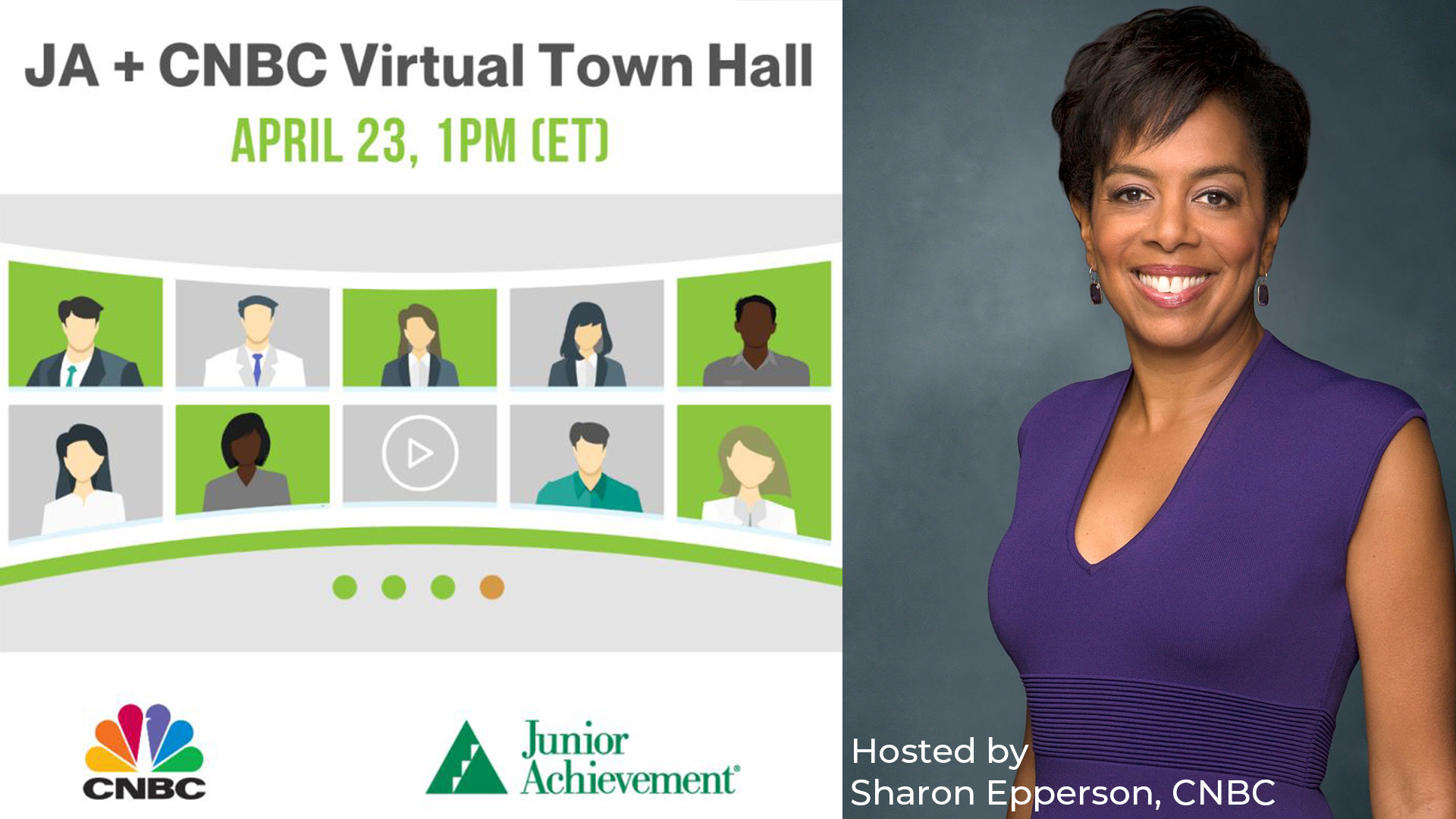
JA + CNBC Virtual Town Hall Recording Available

Recently, Junior Achievement and CNBC teamed up to present a Virtual Town Hall to answer teens’ questions about the financial impact of COVID-19. Hosted by CNBC Senior Personal Finance Correspondent Sharon Epperson, this unique interactive event provided across America direct access to some of the country’s most knowledgeable economists, entrepreneurs, psychologists and counselors and ask them top-of-mind questions about how to best adapt to the new normal. The panelists will offer simple, straightforward strategies to help empower participants to strive toward a bright and successful tomorrow – because tomorrows are more important than ever.

This video features teens from across America asking a panel of experts, including former FDIC Chair Shelia Bair and Shark Tank’s Daymond John, about steps being taken to deal with the economic downturn resulting from the pandemic and what that might mean for the future.

The Virtual Town Hall lasts about an hour. Please feel free to share this video with any teens, teachers, parents, or others who you think might find it helpful!

JA + CNBC Virtual Town Hall Recording Available
read more

Support Restaurants and Beverage Providers During COVID-19

Funky Buddha Brewery giving back to the community. JA celebrates supportive restaurants.

Junior Achievement of South Florida and the JA Circle of Wise Women are fortunate to have developed outstanding relationships with local restaurants and beverage providers who support our programs as storefronts in JA BizTown and at the annual JA World Uncorked event. Now, it’s time to give back to those who are providing delivery or take-out services during COVID-19. Below are logos linked to the restaurants.

In addition, JA is extremely proud of its partnership with Funky Buddha Brewery, which last year released the exclusive Dreamers of Dreams, a craft beer dedicated to JA’s 60th Anniversary. Funky Buddha has started a new project during the COVID-19 crisis – Beers For The Biz. The project brings aid and awareness to family in the service industry affected by COVID-19. Proceeds from each case of Funky Buddha beer sold in April will be donated to CORE™: CHILDREN OF RESTAURANT EMPLOYEES, a non-profit organization dedicated to serving food and beverage service employees with children, who are faced with medical diagnosis, illness, injury or affected by a natural disaster and are in need of help.

Click here to learn more about this project.

RESTAURANTS PROVIDING DELIVERY & TAKE-OUT SERVICES

Support Restaurants and Beverage Providers During COVID-19
read more

The Impact of COVID-19 on Business and Innovation

Presented by Junior Achievement USA

A Guide to How Entrepreneurs and Businesses are Responding to COVID-19

COVID-19’s Impact on Business Unlike other viruses, such as the seasonal flu or common cold, the coronavirus, or COVID-19, is considered a “novel,” or new, virus because humans have had little exposure to it. Hence, we don’t have readily available treatments, like a vaccine, to prevent people from getting sick from COVID-19. As a result, the first line of defense against the disease is called “social distancing.” This means people are being encouraged not to be around other people unless it is necessary.

In many cities and states, officials require so-called “non-essential” businesses to either reduce their operations or close completely to promote social distancing. While these businesses are referred to as non-essential, it doesn’t mean that they aren’t important. But it does mean that their closure will help limit the spread of COVID-19.

Businesses affected include restaurants, which in many cases must close their dining areas, even though they can still prepare food for delivery or take out. Others that must close completely include hair salons, clothing stores, and various retail establishments that don’t offer what are considered “essential” products or services, such as food or medicine.

Due to these restrictions and closures, businesses large and small have had to release many of their employees. This means people who worked for these businesses lost their jobs either temporarily, through a furlough, or permanently, through a layoff. Many of these people are eligible for unemployment benefits, which means that they will receive some amount of money from the government to help pay basic expenses like rent, house payments, and food. The hope is that non-essential business closures will only last a few months and that people will be able to go back to work in the not-too-distant future.

Click here to read the full report

The Impact of COVID-19 on Business and Innovation
read more

Understanding the Financial Impact of COVID-19

Presented by Junior Achievement USA

A Guide to How COVID-19 is Affecting People and the Economy and What It All Means

Making Sense of It All

A lot has changed in a very short amount of time. At the beginning of 2020, the U.S. stock market was at an all-time high, the economy was experiencing an historic milestone of growth and things seemed to be going well for many people. Then, the coronavirus (COVID-19) appeared in the United States and in a very short amount of time everything changed.

While things may seem uncertain, and maybe a bit scary, know that what we are experiencing with COVID-19 won’t last forever. We at Junior Achievement (JA) have some explanations about what’s happening, as well as answers to some of your questions when it comes to the financial impact of COVID-19.

What Makes COVID-19 Different from the Flu or a Cold?

COVID-19 is referred to as a “novel”, or new, coronavirus. This means it is new to humans, though it has probably been around in animals, such as bats, for a long time. It is believed that COVID-19 was first transmitted to humans from animals in Wuhan, China in late 2019. Because human immune systems – the human body’s way of fighting disease – haven’t had much experience with COVID-19, people who get it tend to be sicker for longer, though most people will recover from the disease.

To help put COVID-19 into perspective, think of leveling up in a game. If it’s a level you’ve never experienced before, it may be harder and take you longer to beat it. But with enough time, you will win. For most people’s immune systems, COVID-19 is like a new level of a game. Eventually human immune systems will get used to battling COVID-19 and will win more easily, most likely through a combination of vaccines and an increase in natural resistance. But this won’t happen right away.

Click here to read the full report

Understanding the Financial Impact of COVID-19
read more

JA Business Hall of Fame Postponed

Junior Achievement’s highest priority is the health and safety of our donors, sponsors, partners, honorees, staff and volunteers.  It is with this priority in mind that we have decided to postpone the 2020 JA Business Hall of Fame event on Friday April 24, 2020.This decision is in line with the directive issued by Broward County regarding high attendance gatherings.

We look forward to bringing our business leaders together in the near future to recognize the visionary leadership of our Hall of Fame Laureates and Honorees and, in light of these challenging times, to celebrate the collective courage and resilience of all our community’s leaders.

We would like to take this time to thank all those who support this event each year and the mission of Junior Achievement to prepare our young people to be your next consumers, employees, business owners and job creators. Junior Achievement will continue to play its part in driving workforce training and experience for young people. We hope that all of you will plan to join us on the new date for a well deserved celebration!

Junior Achievement of South Florida’s leadership will continue to monitor the COVID19 situation as it evolves. We encourage you to visit the JA Business Hall of Fame webpage (https://jasouthflorida.org/events/) to check on the status of the event.

If you have any additional questions or need further information, please contact me at La****@************da.org or Robyn Harper, Development & Event Director, at Ro***@************da.org or call (954) 979-7124.  We look forward to celebrating with you soon to empower over 50,000 young people each year to own their economic success.

Regards,

JA Business Hall of Fame Postponed
read more

Boca Magazine February 2020: Light Up The Night

Light Up The Night to Honor Junior Achievement Innovators at the Addison

February 28, 2020

This year’s Light Up The Night will honor our own Margaret Mary Shuff, as well as Marta Batmasian of Investments Limited, as this year’s Junior Achievement Innovators.

Light Up The Night 2020 will be an evening under the banyan trees with tasty bites, great networking, and live entertainment, as honorees are celebrated for their business success and mentorship, and their unquenchable spirit and passion for giving back to the community.

Sponsorship opportunities are available. For more information, contact Robyn Harper at (954) 979-7124, email Ro***@************da.org or visit JASouthFlorida.org/LUTN.

Light Up The Night 2020, powered by Title Sponsor The Warren Family Foundation and Presented by First Horizon Bank will be held at The Addison, 2 E Camino Real, on March 11 from 6 p.m. to 9 p.m.

CLICK HERE to read the full article.

Boca Magazine February 2020: Light Up The Night
read more

Trade School: A College Alternative in 2019

By Hannah Henry, Manager of Marketing & Public Relations, Brand
Junior Achievement USA

A survey conducted by Gallup and Strada Education Network revealed that 36% of those who attended college regret their choice of major. Of those who pursued or completed a bachelor’s degree, findings uncovered that 40% would pick a different field of study. That’s roughly $25,000 a year, for a student who is in-state attending a four-year university, to decide that their degree was not the best choice for them.

According to Mark Danaher, a career counselor at Newington High School in Newington, Connecticut, “My feeling is that high school students don’t have to know the exact career they want, but they should know how to explore careers and put time into investigating them and learning about their skills and interests.”

At 18 or 19, we are expecting teens to know their career-path and putting a hefty price tag on pursuing what they believe is the right option for them. But, are they being given all their options? All the while, some teens may not be exposed to alternatives outside of attending colleges, such as vocational schools.

To assist in the discovery of which path is right for you or your teen, here is an overview of how trade schools could be the perfect fit!

The Difference Between Trade and Vocational Schools

Vocational and trade schools are similar in nature as they both offer an accelerated path to get into a specific career. While most use them interchangeably as an educational institution that teaches individuals for a particular skill set, some identify them as having smaller differentiations. According to the U.S. Department of Education, technical schools teach the theory and science behind an occupation, while vocational schools may take a more hands-on approach to teach skills.

The Unique Perks of Attending a Trade School

Unlike traditional colleges, trade schools focus on one specific area of “trade” learning. This hyper-focus on a specific skill enables trade-schools to offer smaller classrooms with more one-on-one learning opportunities for the students. Additionally, vocational schools educate students of industry-specific rules and regulation, as well as real-work experiences to enable them to get familiar with the type of work they are pursuing.

The amount of time it takes to successfully complete trade school is another perk to this vocational path. While programs vary, vocational training can go from as little as ten weeks. In turn, this makes this educational career path highly appealing to those who are seeking to get into a profession as soon as possible.

With the unique benefits of vocation schooling, this route isn’t just for those who have graduated high school but also for those who are planning to enter a specific industry for the first time, reenter the workforce, and for those who are seeking to change their career path. The diversity amongst trade school students enables them to network and learn from one another, creating an inclusive learning environment.

Current Demand for Skilled Trades in 2019

A large majority, 70%, of construction companies across the country are having trouble finding qualified workers and construction isn’t the only industry suffering. It is estimated that every day for the next decade, 10,000 baby boomers will be reaching retirement age and will be leaving specialized positions in which fewer workers can fill. Luckily for trade schools, their robust skill-focused programs offer a bright future. Careers that will be experiencing more and more demand for skilled labor include:

–     Carpenter

Total new job openings: 83,800

Average salary: $51,120

–     Plumber

Total new job openings: 75,200

Average salary: $58,150

–     Electrician

Total new job openings: 59,600

Average salary: $59,190

Click here to explore possible career paths!

Think the trade-school path is right for you? Click here to learn more!

Program Introduces High Schoolers to Career Paths, Including Skilled Trades

Junior Achievement of South Florida offers its program JA Career Bound to high school students in South Florida. JA Career Bound is a cutting-edge, skills-building leadership program where participants learn the skills necessary to succeed in today’s workforce.

After an opening retreat, students meet once a month for program days focused on specific industries. Students visit some of South Florida’s premier businesses to learn firsthand about the career opportunities and what companies are looking for in future employees. Students learn from top executives who share their journeys to success.

We use interactive JA curriculum to teach key work skills, including communication, critical thinking, goal setting, interviewing, personal branding, problem-solving, public speaking, resume building and teamwork. At the end of the year, students will have the opportunity to put their skills into action by participating in various paid internships with job shadowing. For further details, including registration, CLICK HERE

Trade School: A College Alternative in 2019
read more

Top Soft Skills in the 21st Century Workplace

By Hannah Henry, Manager of Marketing & Public Relations, Brand
Junior Achievement USA

City & Guilds CEO, Chris Jones, once said, “Unfortunately, some people believe that soft skills aren’t that important. However, almost every employer I’ve ever talked to about this disagrees. In a world where job roles are changing rapidly, soft skills will be one of the few constants…” When you think about all of the new colleagues you have met over the years, the teams you’ve worked on, and the challenges you’ve faced within your business, soft-skills are at the heart of it all.

While some might argue that soft skills hold lesser value to a business, a report from International Association of Admin Professionals, OfficeTeam and HR.com reveals 67% of HR managers reported they would hire a candidate with strong soft skills, even if his or her technical skills were lacking. Why might this be? Employees with strong soft skills have the ability to grow and flourish in any environment due to the fact that they have experience and interpersonal skills that make adapting easier than those who lack such skills.

Soft skills include communications, listening, and emotional perceptivity, such as empathy and sympathy. These skills tend to reside in personal attributes, personality, and character traits, and social cues picked up throughout one’s life. These skills allow people to connect with one another by effectively “reading” those they interact with. These are not skills that are learned in a short period of time, instead, they are acquired, tuned, and even perfected throughout experiences and time.

Building Soft Skills in the Workplace

Research from the Hay Group identified managers that incorporate a range of “soft talent”, those with soft skills, in their leadership approach have been shown to increase their team performance by about 30%. Through the survey work of LinkedIn profiles of people who are getting hired at the highest rates, it was determined: creativity, persuasion, collaboration, adaptability, and time management were the 5 most in-demand soft skills sought by companies in 2019. How can a company harness these skills in their workplace? The answer is not to find new candidates to fill positions. Training in these areas is available. In fact, research from MIT Sloan determined that soft skills training may improve productivity within an organization. Findings also included that such training returned roughly 250% on investment within eight months post-study.

Finding Candidates with Soft Skills

Hard skills or technical skills are easier to identify when meeting a potential employee. For the most part, the candidate will include their experience and hard skills on their resume, as well as mention them in an interview. Soft skills are not so easy to identify. When you’re looking at a possible candidate for a position, most employers are looking to ensure a person can do the job at hand. They want to have the reassurance that this individual can handle the complexity of the workload and complete crucial projects. But by focusing on only this skillset, also known as “hard skills”, employers are overlooking the underlying skills that determine how a candidate will interact with those around them, be able to connect with their peers, managers, and even clients. Not everyone develops soft skills at the same pace, but experience assists with the development. More experience can equate to building stronger skills at a faster pace compared to those who have not stayed within a position or a company for long.

Interview Questions to Ask

LinkedIn revealed that only 60% of hiring managers agree that screening for soft skills is tough, but crucial as it will determine how new hires will be able to interact with your team. The professional networking platform identified 6 key soft skills and questions to ask to decode how a candidate’s level of soft skills.

1.  Adaptability

Ask the candidate to discuss a time when they were asked to do something they haven’t done before, how they reacted and what they learned.

2.  Culture Fit

Explore what the interviewee is looking for in a job by asking what three things are most important to them in a position or workplace environment.

3.  Collaboration

Have the candidate give examples of when they had to work with someone who was challenging to work with, how they handled working with this particular individual, and what the outcome was.

4.  Leadership

Ask the interviewee to discuss when something significant didn’t go according to plan at work, what was their role in the project or task, and the final result.

5.  Growth Potential

Have the candidate discuss how they handled a crisis or problem when their manager was unavailable and who they consulted with to determine the solution.

6.  Prioritization

Ask the interviewee to tell you about a time when they had to juggle several projects at the same time, how they were able to manage their time and the final result.

To learn more about how students can develop their soft skills to prepare for the workforce, check out JA Career Success®!

In addition, Junior Achievement of South Florida offers its program JA Career Bound to high school students in South Florida. JA Career Bound is a cutting-edge, skills-building leadership program where participants learn the skills necessary to succeed in today’s workforce.

After an opening retreat, students meet once a month for program days focused on specific industries. Students visit some of South Florida’s premier businesses to learn firsthand about the career opportunities and what companies are looking for in future employees. Students learn from top executives who share their journeys to success.

We use interactive JA curriculum to teach key work skills, including communication, critical thinking, goal setting, interviewing, personal branding, problem-solving, public speaking, resume building and teamwork. At the end of the year, students will have the opportunity to put their skills into action by participating in various paid internships with job shadowing. For further details, including registration, CLICK HERE

Top Soft Skills in the 21st Century Workplace
read more

Buying Local in a Buzzing Economy

By Hannah Henry, Manager of Marketing & Public Relations, Brand
Junior Achievement USA

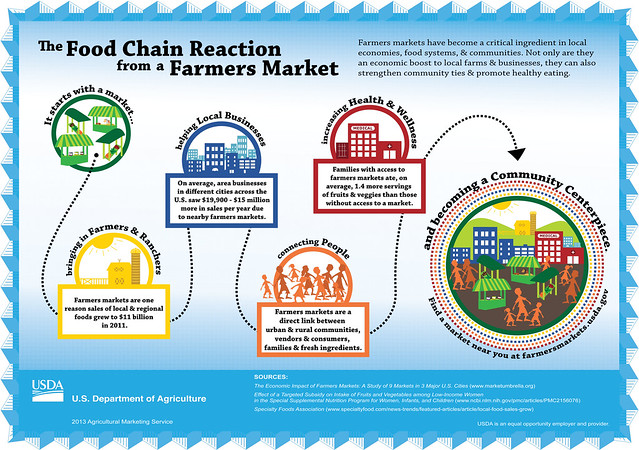
How many times have you heard “Buy Local” or “Support Local Businesses”? Probably hundreds of times. So why this “local” push? What does it do for you or your community? With summer here, the concept of buying locally will only increase, specifically about your local farmers’ markets. While providing you with delicious produce, farmers markets potentially have a more significant impact on the community than it does just in your fridge.

First off, let’s explore some fun facts:

  • Did you know that foods in the U.S. travel an average of 1,500 miles just to get onto your plate? Besides providing community perks, farmers markets cut down on the pollution due to these extensive trips.
  • The growers that you meet at farmers markets can also answer all of your questions about what products they have, where they came from, and how they were grown or raised.
  • People who shop at farmers markets have 15-20 social interactions compared to 1-2 per visit if they went to the grocery store! Talk about getting connected in your community!
  • The USDA’s Agriculture Marketing Service began tracking the farmers market activity in 1994. Since then, the markets in the United States have grown to 8,720, which is a little over 7% from 2013 alone.
  • The total annual sales from U.S. farmers markets are valued at about $1 billion!

What are Farmers Markets

To start let’s define what farmers markets really are. In essence, these local markets include farmers who live in nearby towns who bring their fresh produce and more to an open space, most likely an open parking lot, for community members to purchase. Believe it or not, the USDA has actual state rules and operating guidelines that farmers have to follow in order to be eligible to sell their vegetables and fruits, which means their locally grown items have been reviewed by similar, if not the same, standards as your grocery store products! In order to participate, the farmer or vendor agrees to pay a fee or percentage of their sales for their booth space.

Inside the Community Economy

Now, let’s jump into the good stuff- the economic impact of farmers markets in your very own communities! To start us off, did you know 89% of farmers surveyed reported sourcing their supplies locally, meaning that what they receive from their communities they are essentially putting back in! This is nearly 2 times the amount of money that is put in compared to wholesale farms, which reported only purchasing 45% of their inputs from their neighbors. To break it down even further, studies conducted by Civic Economics discovered that for every $1.00 we spend at a large grocery store chain, only 15 cents will stay in your local community.

Creating Jobs… Locally

Farmers markets in South Carolina reportedly created between 257-to-361 full-time jobs and generated up to $13 million, by one estimate. Another study from the Sacramento Region in California discovered a job effect of 31.8, which meant for every $1 million of “output” or sales they produce, a total of 31.8 jobs are being created within their community, including on-farm labor and other farm-related positions.

Farmers who are in higher demand by their community members have an opportunity for growth or expansion. By doing so, more “hands-on-deck” during the growing and selling time will be necessary. Through this type of scenario, local community members may find additional work or primary work readily available to them by these farmers.

Ease of Access for Communities

The Farmers Market coalition reported in 2016 that $20.2 million in SNAP benefits (aka food stamps) were spent at local farmers markets. Additionally, over half of the farmers market shoppers (60%) reported that their local market had better prices than they experienced in their grocery stores!

Want to start shopping locally this summer? Click here to find a farmers market nearest you!

Learning the impact of local businesses provides an educational opportunity for youth in your community. Amongst all Junior Achievement’s programs, JA Our Community puts a high focus on helping elementary-school students understand how their community operates, what they can do to contribute, and how their local economy works.

Buying Local in a Buzzing Economy
read more

South Florida Business & Wealth July 2019: Students Offer Consulting Services

South Florida Business and Wealth July 2019: JA’s Entrepreneurial Students Offer Consulting Services

By Sally Ann O’Dowd
July 2019 Issue

From learning the ropes of supply chain management to studying the latest in big data, Geomani Brooks was not a typical high school graduate. His evening routine of researching companies likewise showed exceptional rigor for his age.

But such are the interests and habits Brooks developed during his two years in Junior Achievement of South Florida, as a junior and senior at South Broward High School. From there, he earned a 2018 summer internship at City Furniture, whose president, Andrew Koenig, is a JA board member.

“I was shadowing the global logistics team for two months,” recalls Brooks, who will enter his sophomore year at Broward College in the fall. “Each day , I would shadow a different person, and learn how they do things as individuals and as a team. It was amazing, how much went into sourcing fabrics; they were very aware of where they got products from and child labor laws. That was one of the first questions I asked them.”

South Florida Business & Wealth July 2019: Students Offer Consulting Services
read more